
Riparia MX constructs an Axolotl Conservation Center in Mexico
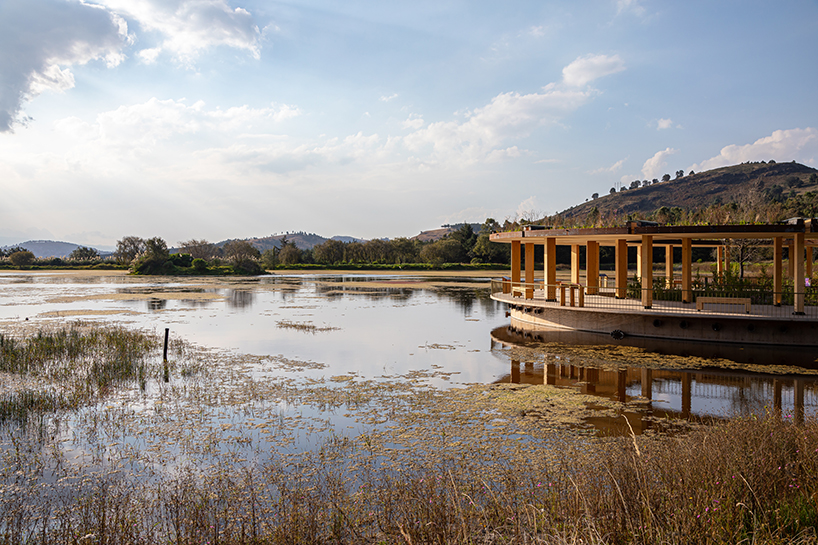
The Ajolotario is a wildlife pavilion and wetland restoration project by Riparia MX, located within Sierra Morelos Park in Mexico. The project combines environmental infrastructure with architectural design, focusing on habitat recovery, water management, and low-impact construction. It supports the conservation of six endangered axolotl species, along with other local amphibians and wildlife.
The pavilion is recognized as the first building in Mexico constructed using cross-laminated timber (CLT). This system replaces conventional concrete and steel structures with mass timber, reducing the carbon footprint of the construction process. CLT panels are composed of layered wood elements arranged in alternating directions, creating structural stability while enabling prefabrication and efficient assembly. As a renewable material, timber contributes to carbon sequestration when sourced and managed appropriately.
all images by Onnis Luque unless stated otherwise
Ajolotario reactivates wetland ecosystem in Sierra Morelos Park
The architectural intervention by Riparia MX’s design team is integrated within a broader landscape strategy aimed at restoring the degraded ecosystem of the park. Prior to the project, the main lake had lost much of its capacity due to leakage and environmental decline. The design introduces a wastewater recovery and treatment system that processes approximately 430 cubic meters of water per day. Wastewater is collected from nearby communities, including San Mateo Oxtotitlán, and transported to the site, where it undergoes a combination of aerobic and anaerobic biological treatment followed by natural filtration through wetlands, streams, and planted areas.
This system enables the reuse of treated water for irrigation and non-potable uses, including park facilities. The remaining water is reintegrated into the ecosystem, contributing to the restoration of the lake, which was refilled in less than 90 days. The water infrastructure supports biodiversity by creating habitats for birds, amphibians, invertebrates, and other species, both aquatic and terrestrial.
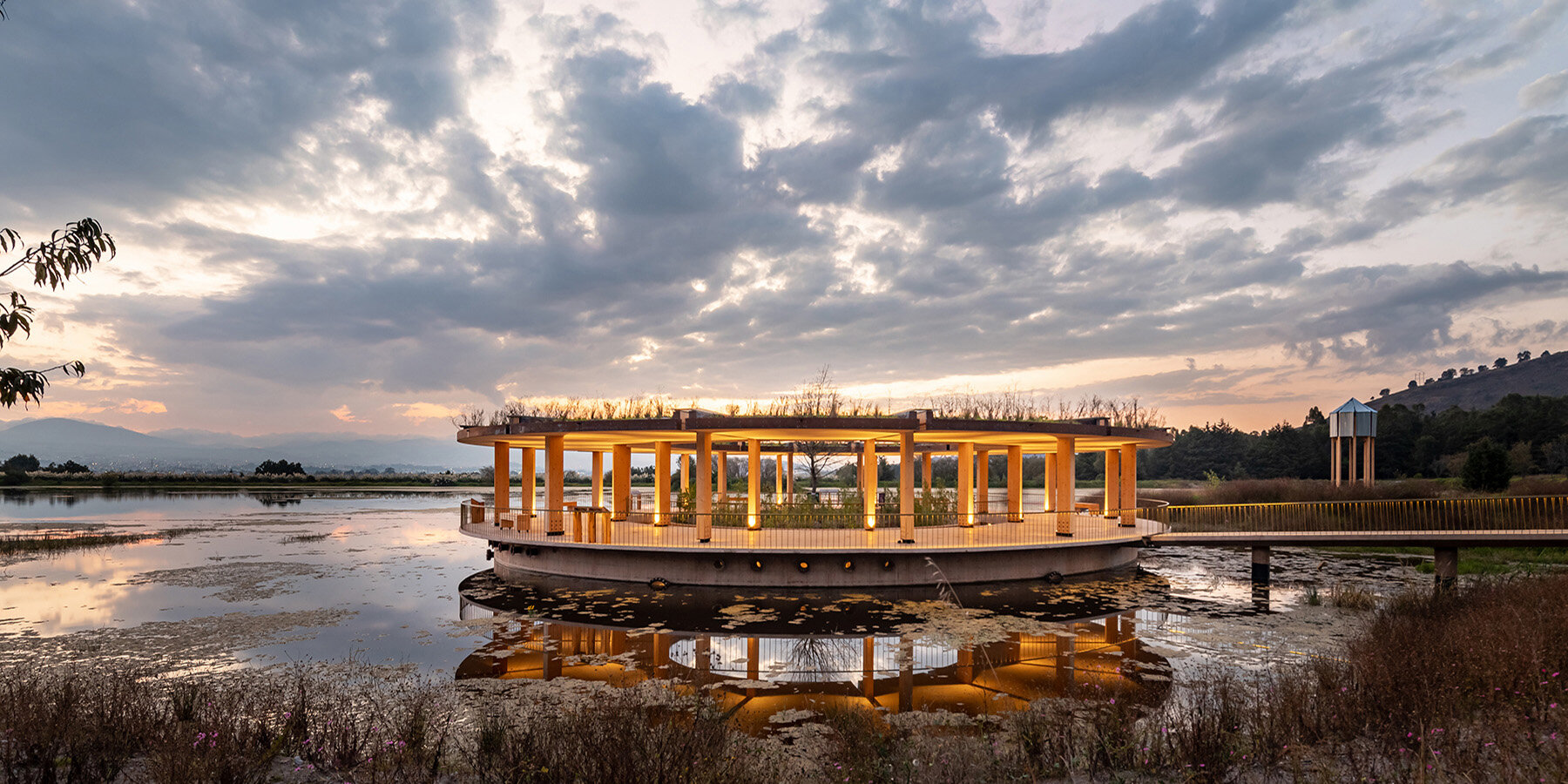
The pavilion is positioned within the wetland environment, allowing direct observation of ecological processes. Its design incorporates above- and below-water spatial conditions, creating a continuous relationship between architecture and habitat. The surrounding landscape was reconfigured to include a diverse range of native vegetation, with approximately 20,000 plants across 150 species, including trees, shrubs, herbaceous plants, and aquatic species. This planting strategy enhances ecological resilience and supports pollinators and seasonal biodiversity.
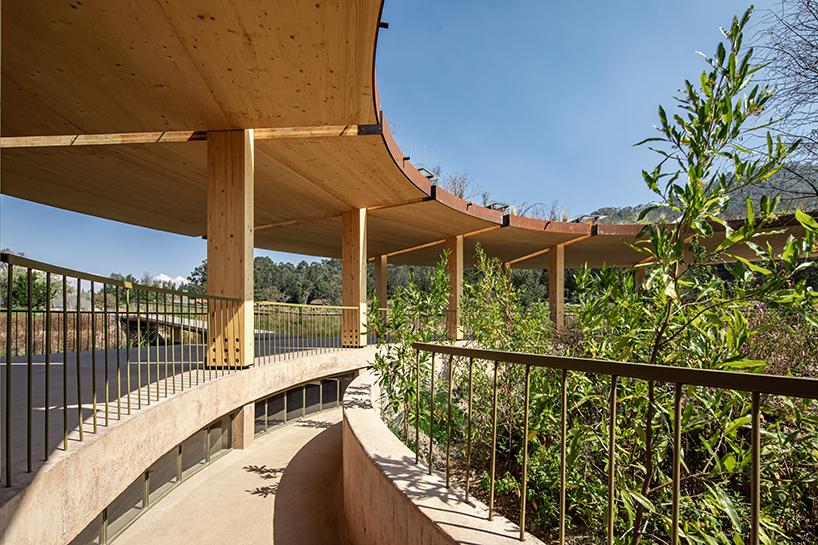
the structural system aims to capture CO₂ and challenge stigmas around wood as a structural material in Mexico
recycled materials and timber construction shapes Ajolotario
Material strategies extend across the site. In addition to the CLT structure, the project incorporates recycled concrete for permeable pathways, recycled wood for decking and bridges, and a waterproof concrete base for submerged components. The integration of these materials supports durability while maintaining environmental performance.
The construction process addressed logistical challenges related to building within a wetland environment and in an area with limited infrastructure. The pavilion was assembled using crane operations, with construction completed within eight months. A workforce of approximately 400 people contributed to the project, including trained carpenters specialized in timber construction.
The project establishes a closed-loop system in which water, vegetation, and built structures operate together. It also incorporates provisions for future energy and water self-sufficiency, including the potential integration of rainwater harvesting and photovoltaic systems. By combining mass timber construction, ecological restoration, and environmental infrastructure, the Ajolotario demonstrates an approach in which architecture supports both habitat regeneration and public engagement with natural systems.
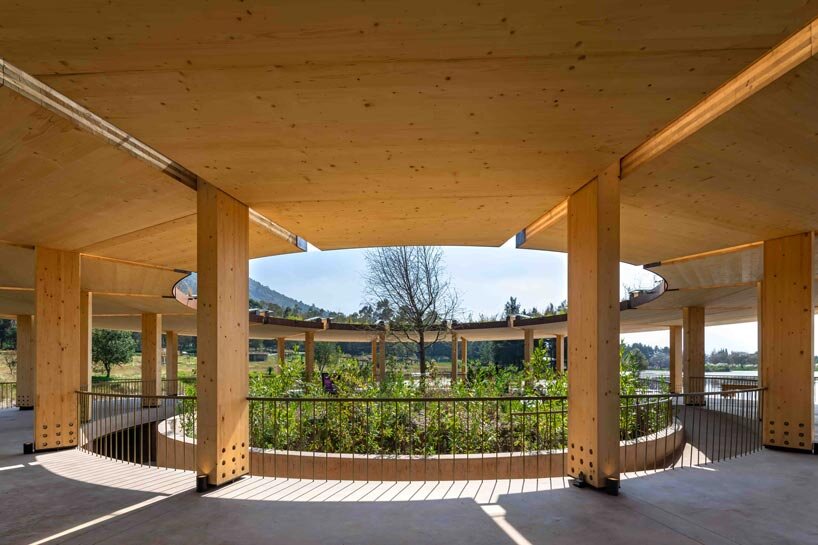
the upper floor functions as a viewpoint and multipurpose space
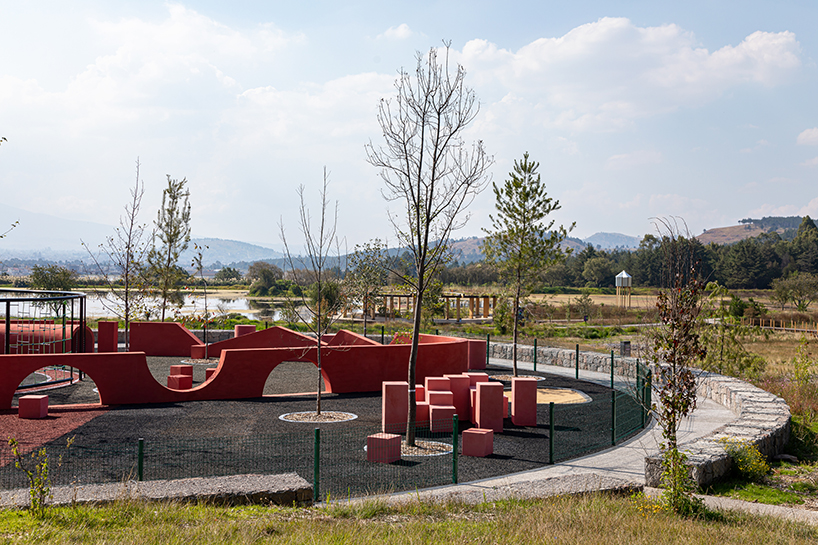
part of Sierra Morelos Park’s restoration plan, playgrounds built with recycled material, entertain young users
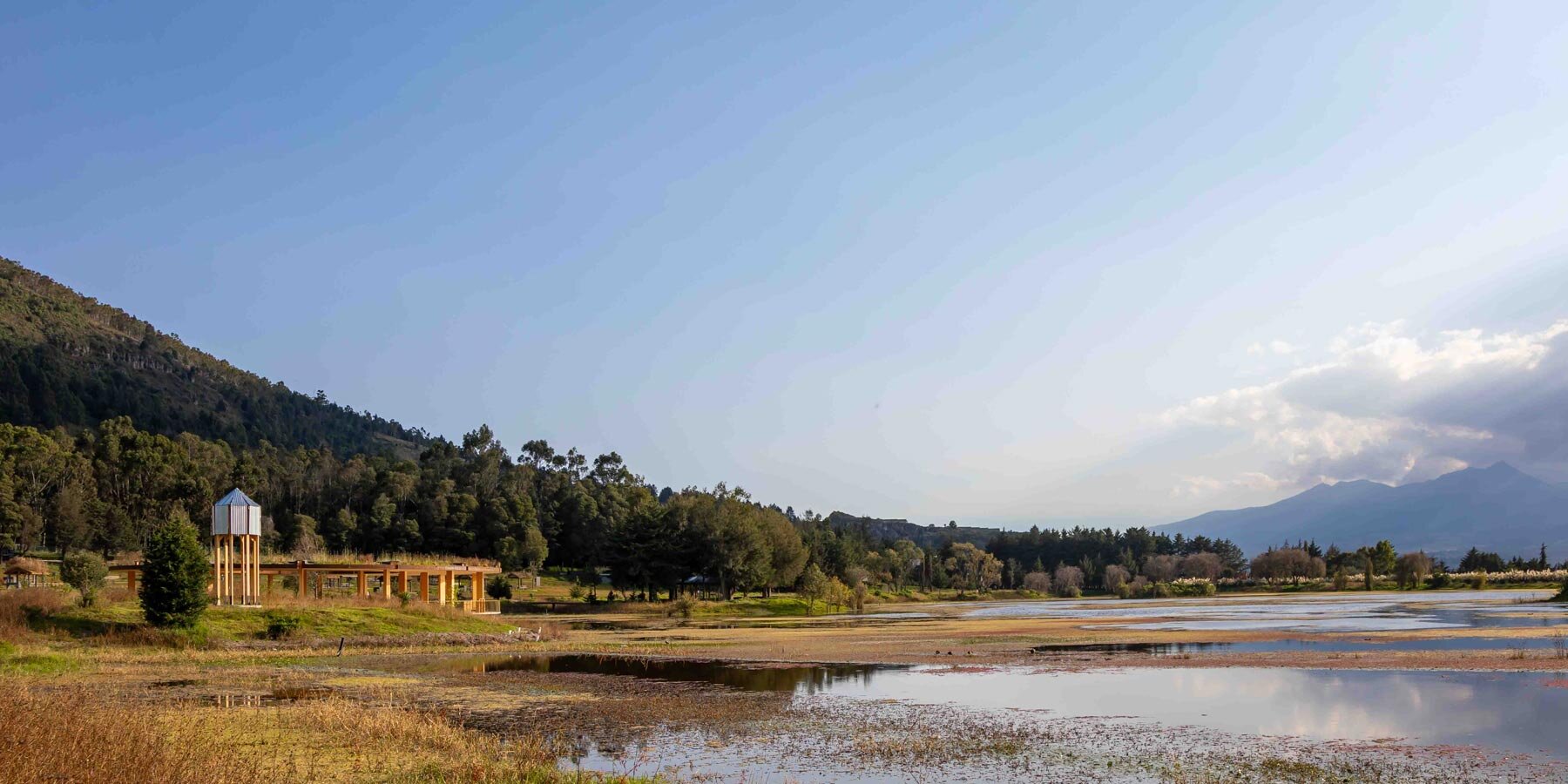
the pavilion allows observation above and below water
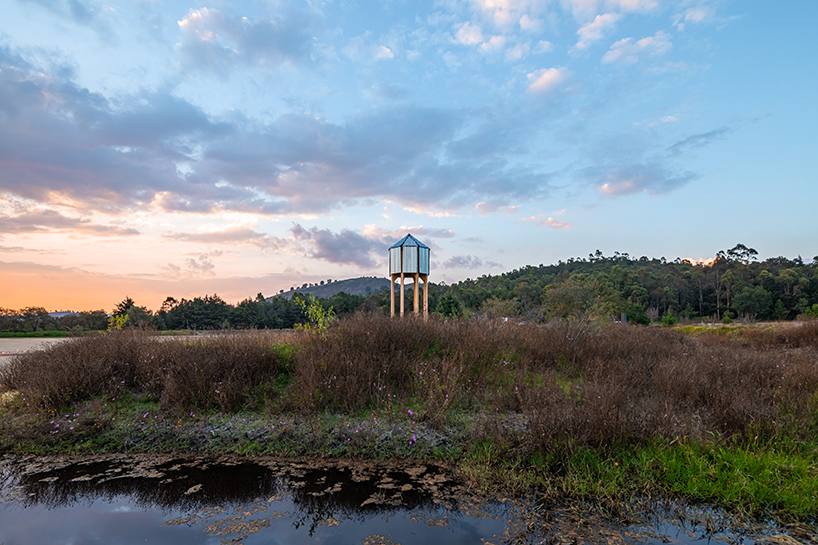
leftover wood is used to build a bat tower that can host up to 5,000 of these species
the basement is underwater, ensuring an ideal temperature for the amphibians
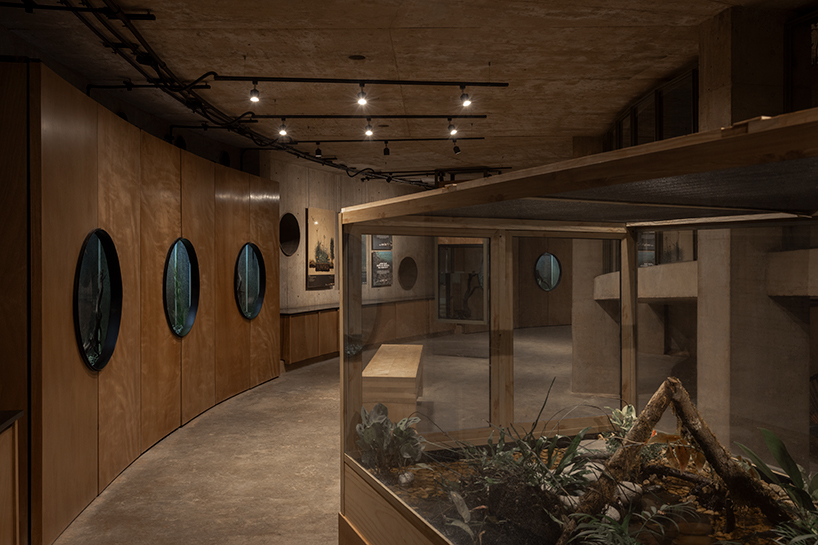
the terrarium houses species that undergo metamorphosis and can live out of water | image by Zaickz Moz
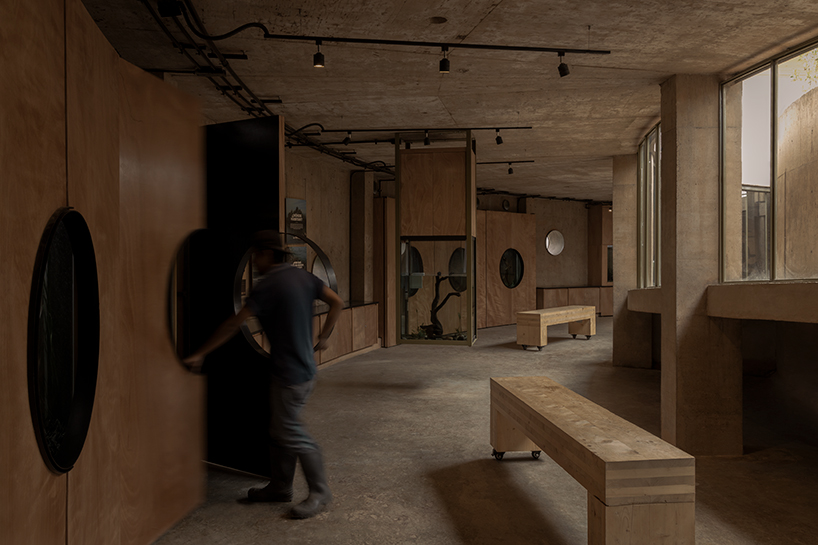
in the basement, the route consists of an exhibition of axolotls in their floating aquariums | image by Zaickz Moz
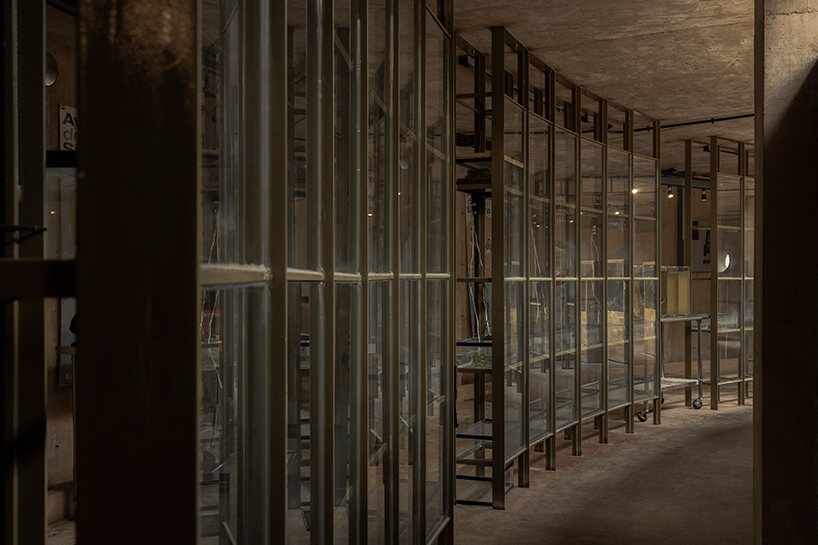
the transparent laboratory is part of the exhibit, allowing visitors to see the biologists’ tools | image by Zaickz Moz
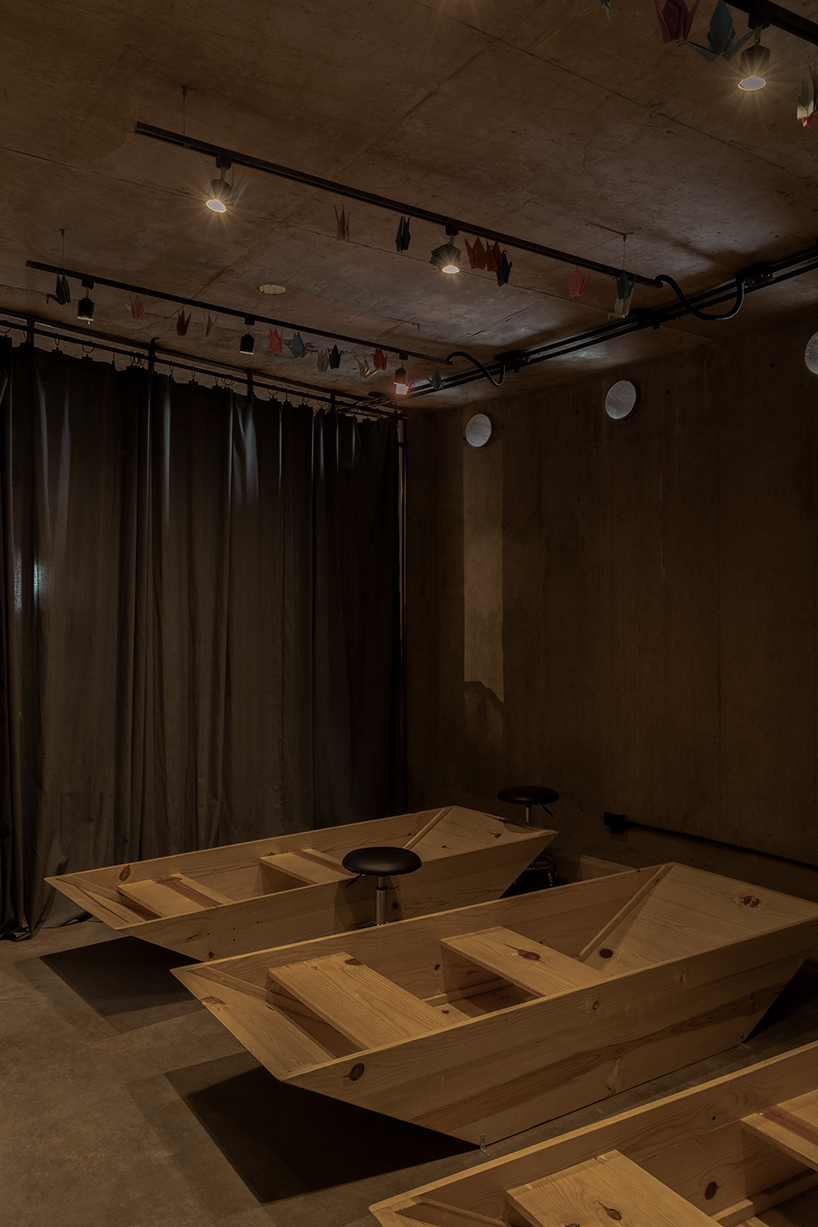
a small screening room invites children to sit in boats that recreate trajineras | image by Zaickz Moz
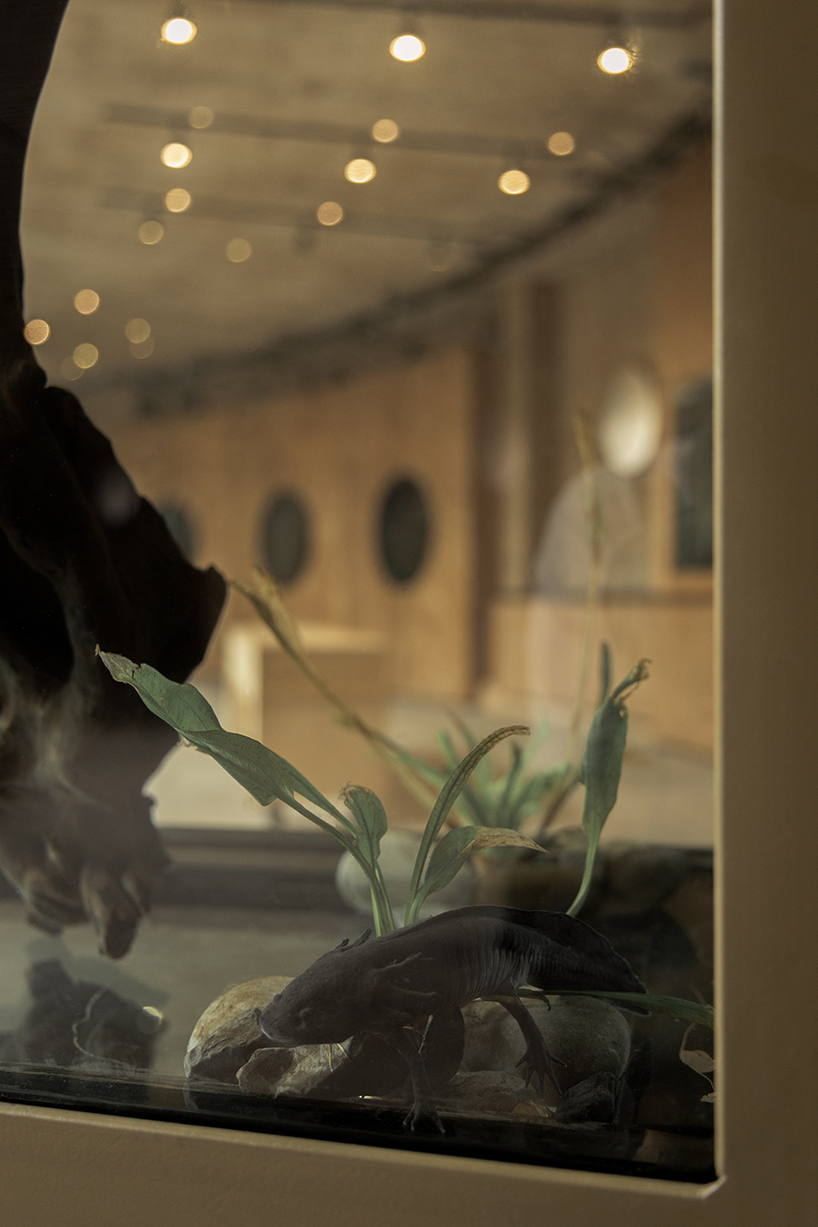
Ajolotario seeks to make the existence of the 17 ambystomas visible | image by Zaickz Moz
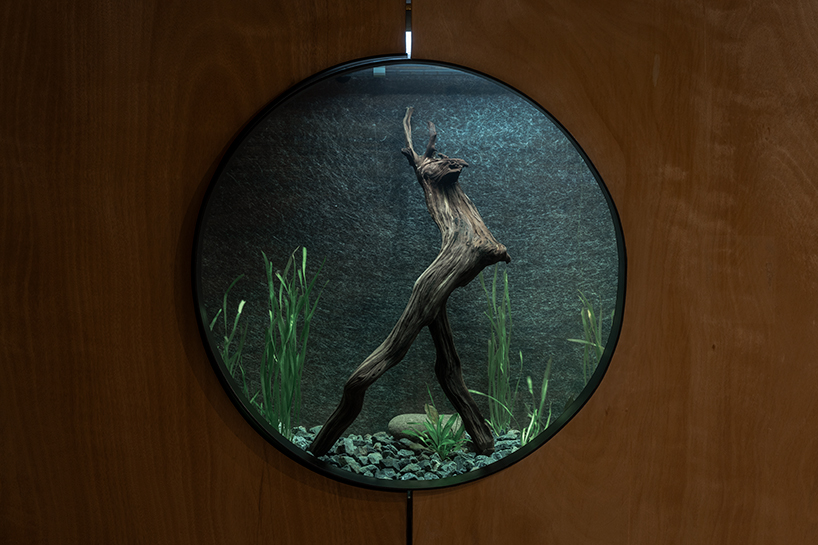
the circular aquariums allude to the skylights that aim to show the habitat of the amphibians | image by Zaickz Moz
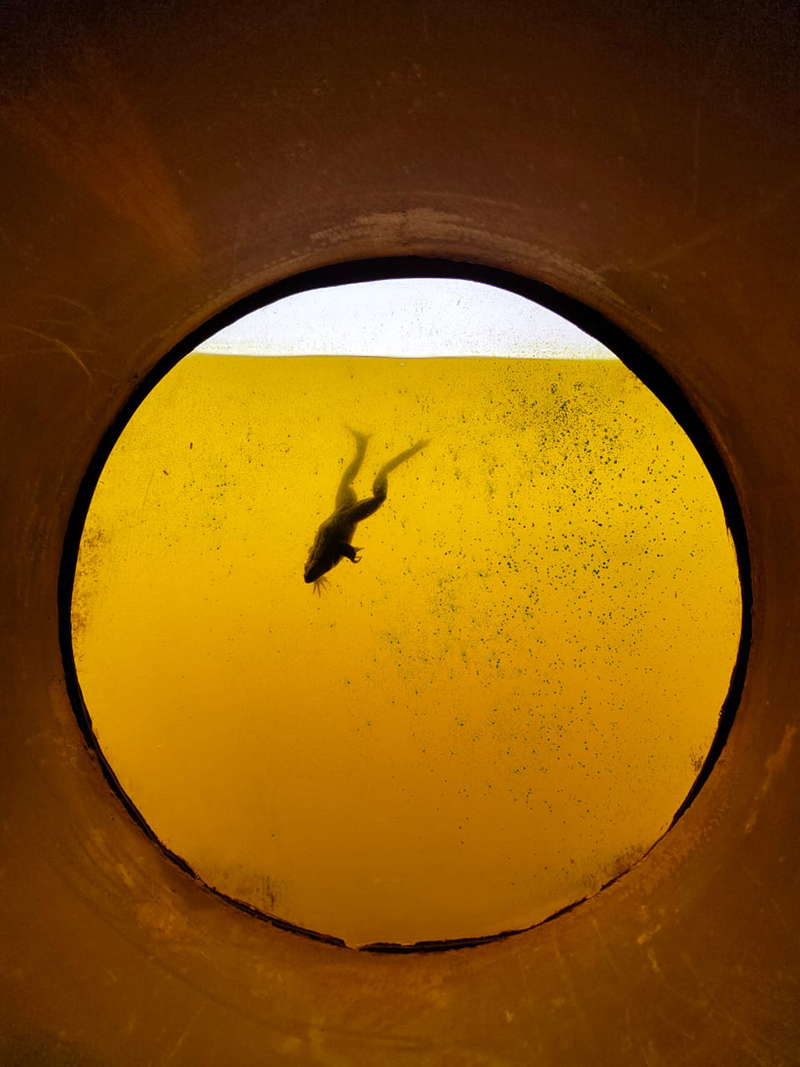
circular windows to the lake show the real habitat of the wetland | image taken by a visitor
project info:
name: Ajolotario Sierra Morelos
architects: Riparia – Laurent Herbiet & Giordana Rojas
location: Parque de la Ciencia Sierra Morelos, Toluca, Estado de México, Mexico
area: 924.50 sqm
principal architects: Laurent Herbiet and Giordana Rojas
design team: Andrés Burguete, Rubén Esparza
architecture team: Darío Romano, Fernanda Romero, Aline González, Ruksanda Rebollo
mechanical, electrical engineers and plumbing: Sistemas Pluviales
structural engineers: Óscar Trejo
ornithology consultants: Tierra de Aves
lighting design: In Light We Trust
logistics consultant: GEFCO
legislation and regulation consultant: INECOL (Instituto de Ecología de la UNAM)
structural system: KLH Massivholz GmbH Cross Laminated Timber KLH, Johann Pabst Holzindustrie GmbH Glulam columns and beams, Rothoblaas screws, Holcim Mexico Structural concrete
photographer: Onnis Luque | @onnisluque_fotografia, ZAICKZ | @zaickz.moz
designboom has received this project from our DIY submissions feature, where we welcome our readers to submit their own work for publication. see more project submissions from our readers here.
edited by: christina vergopoulou | designboom
The post circular timber pavilion anchors wildlife and wetland restoration park in mexico appeared first on designboom | architecture & design magazine.